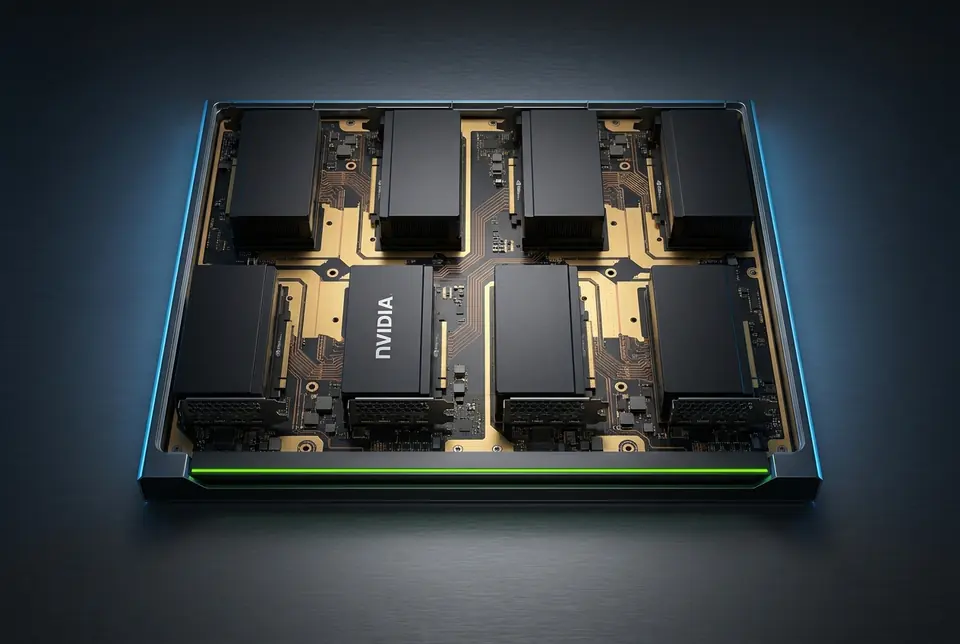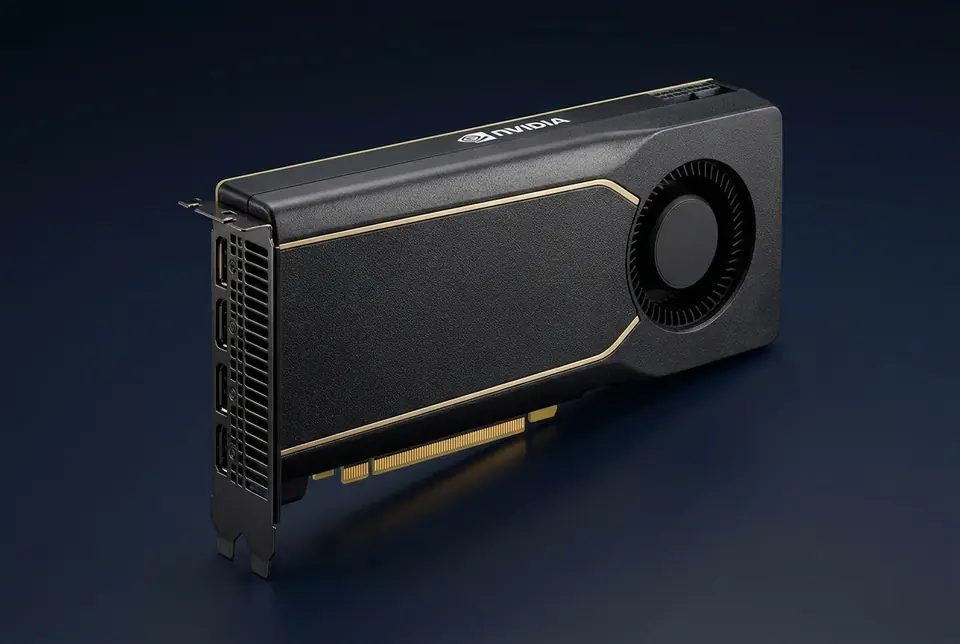

Compact inference server racks in a modern colocation hall

AI & SaaS

Scale your product without letting compute define your roadmap.

AI companies live and die by inference latency, training velocity and unit economics. Peregrine supplies Australian-hosted GPU capacity, operates the platform layer and helps you decide when reserved or dedicated infrastructure makes sense. For sustained workloads, dedicated or reserved infrastructure can provide more predictable economics than purely consumption-based compute.

Infrastructure can be designed to support customer security, governance and compliance requirements. Use one service or all four.

ASSESSBUILDOPERATECAPACITY

Part 1 · Use cases

GPU workloads in ai & saas companies.

Fibre optic cross-connect patch panel with dressed jumpers

Use case 01

Model Training & Fine-Tuning

Pre-training, continued training and fine-tuning of foundation and domain models need sustained multi-GPU throughput.

Reserved NVLink-coupled nodes keep training velocity predictable; on-demand burst absorbs experiments.

GPU considerations

  • Memory: large models favour high-memory GPUs
  • Interconnect: NVLink HGX for multi-GPU training
  • Storage: fast checkpoint and dataset storage
  • Data residency: customer data can remain in Australia

Row of identical GPU servers stacked in one rack

Use case 02

Production Inference

Serving models to customers demands predictable latency and capacity that grows with usage, at a unit cost you can price against.

Dedicated or reserved inference fleets give more predictable economics than purely consumption-based compute for sustained traffic.

GPU considerations

  • Memory: model size per replica
  • Interconnect: PCIe platforms for replica fleets
  • Storage: model registry and caches
  • Data residency: Australian endpoints for local customers
DATAGPU COMPUTEMODEL / RESULT

Use case 03

AI Agents & RAG

Agentic products and retrieval pipelines generate sustained, bursty inference plus embedding and vector workloads.

Model serving environments can provide OpenAI-compatible APIs, so existing application code points at Peregrine endpoints.

GPU considerations

  • Memory: moderate per endpoint
  • Interconnect: single node
  • Storage: vector and document stores
  • Data residency: tenant data stays onshore
Compact inference server racks in a modern colocation hall

Use case 04

Evaluation & Experimentation

Batch evaluation, red-teaming and ablations are bursty and ideal for on-demand capacity.

Quotas and scheduling let research and product teams share GPUs without blocking releases.

GPU considerations

  • Memory: varies
  • Interconnect: usually single node
  • Storage: experiment artefacts
  • Data residency: as required

Part 2 · How to deploy with Peregrine

Four ways to engage — use one or all.

  1. 01ASSESS

    Compute Blueprint

    Size the workload before committing — GPU count, architecture and the point at which reserved or dedicated capacity becomes economical.

    Learn more
  2. 02BUILD

    Build GPU Infrastructure

    Where it makes sense, design dedicated inference infrastructure you own for steady-state traffic, with Peregrine handling specification and commissioning.

    Learn more
  3. 03OPERATE

    Managed AI Platform

    Peregrine runs the platform — scheduling, serving, monitoring, upgrades — so engineers ship product.

    Learn more
  4. 04CAPACITY

    GPU Capacity + Private AI Cloud

    Reserved, dedicated or on-demand Australian-hosted GPUs, or a Private AI Cloud, matched to project requirements and subject to availability.

    Learn more

Recommended platforms

Platforms commonly considered for these workloads.

Indicative only; the Compute Blueprint confirms platform, interconnect and scale per project.

All GPU platforms

Infrastructure models: capital vs operating

Early-stage teams usually prefer operating-expense capacity; as utilisation becomes predictable, an owned build (capital) for steady-state inference can lower unit cost. Peregrine scopes both paths per engagement; no prices are published on this site.

FAQ

Common questions.

Plan Your GPU Capacity.

Tell us about your ai & saas companies workloads and deployment preferences. A compute specialist will discuss the appropriate infrastructure model.